
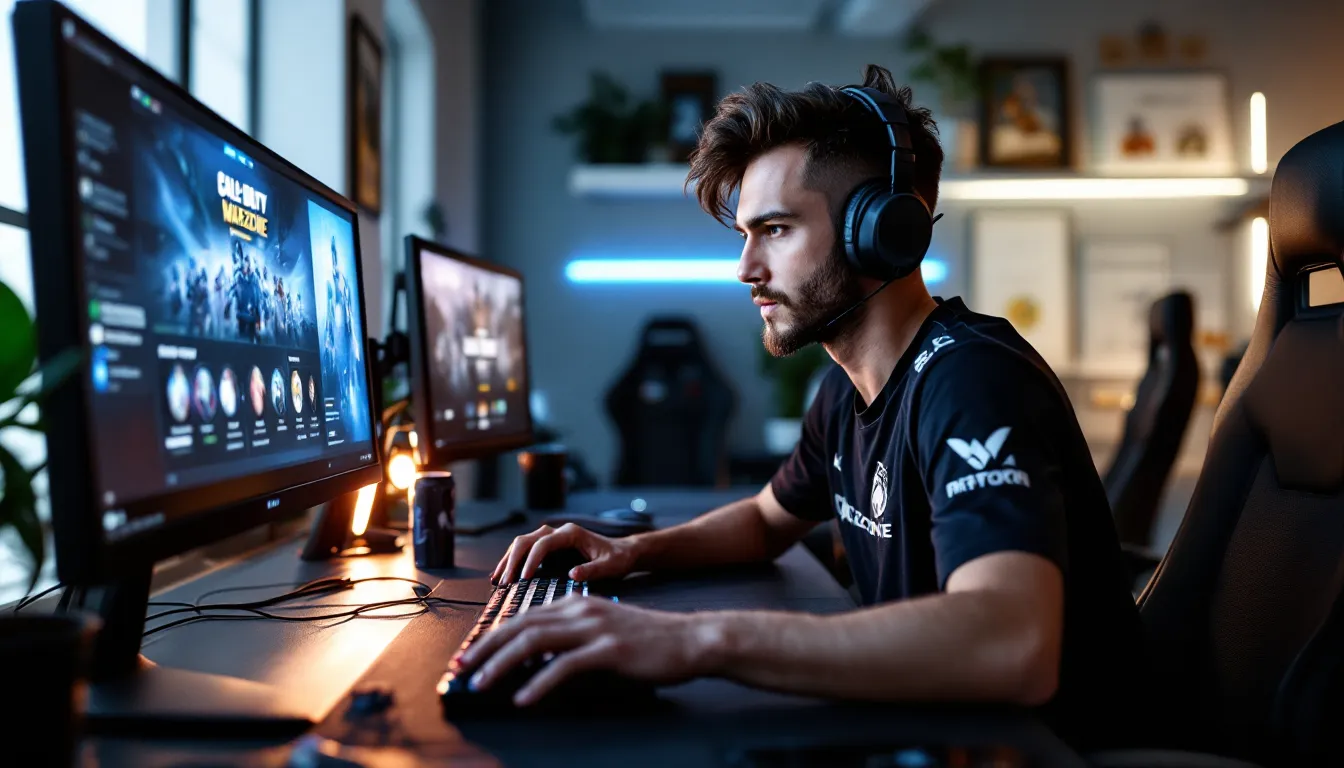
Playing Warzone for cash prizes isn’t just a pipe dream anymore. In 2026, the competitive Call of Duty: Warzone scene offers legitimate opportunities for players to monetize their skills, whether they’re grinding in weekend amateur brackets or chasing six-figure payouts in professional circuits. The barrier to entry has never been lower, but the competition’s fiercer than ever.
This guide breaks down everything needed to start competing in paid Warzone tournaments: where to find them, how to register, what skills separate prize winners from cannon fodder, and the practical realities of turning match wins into actual money. No fluff, just the tactical intel that matters.
Key Takeaways
- Warzone tournaments for money range from accessible $5–$10 wager matches to professional circuits offering $100,000+ prize pools, with earning potential spanning $0–$100,000+ annually depending on skill tier.
- Success in competitive Warzone requires mastering tournament-specific skills beyond pub-stomping, including meta loadouts, circle prediction, team communication, and VOD review separate from casual gameplay.
- Top platforms like CMG, UMG, GameBattles, and FaceIt each offer unique tournament formats and prize structures; beginners should start with low-stakes wagers before entering $50+ bracket tournaments.
- Competitive-ready hardware setup (PC with RTX 4070+, 240Hz monitor, mechanical keyboard, wired internet) costs $1,800–$3,500 and removes performance obstacles, though hardware alone doesn’t guarantee wins.
- Tournament winnings are taxable income requiring proper record-keeping, estimated quarterly payments for significant earnings ($5,000+), and potentially professional business classification to deduct expenses and losses.
- Progression from amateur to professional typically takes 18+ months with consistent 20+ hours weekly practice; realistic financial management means maintaining savings for 6+ months before pursuing full-time competition.
Understanding the Warzone Competitive Tournament Landscape
The Warzone tournament ecosystem has matured considerably since the game’s launch. What started as scattered Discord communities hosting $500 prize pools has evolved into a structured competitive ladder with multiple tiers of play.
Today’s landscape splits into distinct categories based on organization level, prize distribution, and player caliber. Understanding where a player fits in this hierarchy is crucial before dropping entry fees or wasting time in mismatched competition.
Types of Paid Warzone Tournaments
Wager Matches are the most accessible entry point. These are typically 1v1, 2v2, or full squad matches where players or teams put up equal money, and the winner takes all (minus platform fees). Stakes range from $5 to $500+ per match. Platforms like CMG (CheckMate Gaming) and UMG Gaming help these constantly, with matches starting every few minutes during peak hours.
Open Bracket Tournaments allow anyone to register and compete, usually following a single or double-elimination format. Entry fees typically run $10-$50 per player or team. Prize pools correlate directly with participant count, so a popular 150-team tournament might offer $5,000-$15,000 to top finishers. These run weekly on platforms like GameBattles and Challengermode.
Kill Race Tournaments score participants based on eliminations within a set time window rather than placement. Players queue into public Warzone matches and submit their highest kill games. Top kill counts win cash. These are popular for solo players who can’t commit to fixed tournament schedules. Prize pools generally sit between $500-$2,500.
League Play and Seasonal Circuits represent the competitive pinnacle. Organizations like FaceIt, ESL, and BLAST run multi-week leagues with qualification requirements, scheduled matches, and substantial prize pools. The Call of Duty League (CDL) ecosystem occasionally includes Warzone components with prize pools exceeding $100,000. These demand consistent availability and top-tier performance.
Creator and Influencer Tournaments occupy a unique space. Streamers like NICKMERCS, TimTheTatman, or organizations like 100 Thieves occasionally host invite-only or hybrid tournaments with open qualifying slots. Prize pools can hit $50,000+ and offer massive exposure, but slots are limited and competition includes professional players.
Prize Pool Ranges and Earnings Potential
Realistic earnings expectations vary wildly based on skill level and time investment. The truth is, most players won’t turn profit initially, tournament play is a skill unto itself, separate from pub-stomping.
Amateur/Casual tier ($0-$2,000 annual): Players competing in weekend opens and small wagers. Expect to lose money while learning. Break-even is an achievement in year one. Success rate in this bracket typically sits around 30-40% for moderately skilled players (1.5+ K/D).
Semi-Competitive tier ($2,000-$15,000 annual): Regular top-16 finishes in weekly tournaments, profitable wagers, and consistent league participation. Requires 20+ hours weekly, 2.0+ K/D, and solid team chemistry. This is where Warzone becomes a legitimate side income.
Professional tier ($15,000-$100,000+ annual): Top 100 global placement, sponsored team support, consistent major tournament prize money. This is full-time work requiring 40-60 hours weekly, 3.0+ K/D against competitive lobbies, and networking within the pro scene.
The top 0.1% of competitors, those winning major championships and securing org contracts, can clear six figures annually from Warzone alone when factoring tournament winnings, sponsorships, and content creation. But for context, that’s roughly 200-300 players globally out of millions competing.
Top Platforms for Finding Warzone Cash Tournaments
Knowing where to look separates active competitors from wannabes browsing Reddit threads. Tournament platforms vary in legitimacy, payout reliability, and competition quality.
Major Tournament Organizers and Leagues
CMG (CheckMate Gaming) remains the go-to for North American wagers and small tournaments. The platform handles escrow reliably, offers instant matchmaking for wagers, and runs daily/weekly tournaments with $500-$5,000 pools. The interface is clean, dispute resolution is fair (if slow), and the community is active. CMG takes a 10-15% cut, which is industry standard.
UMG Gaming competes directly with CMG and honestly does it better in some areas. Better mobile app, faster payouts (2-3 business days vs. CMG’s 5-7), and slightly lower fees. The player pool skews more competitive, which is good for improvement but brutal for beginners. UMG also hosts larger monthly championships with $10,000+ prize pools.
GameBattles (MLG/Activision’s official ladder) offers the most prestigious competitive ranking system. Wins here carry weight in the community. The platform hosts everything from 1v1 wagers to full team leagues. Prize tournaments are less frequent than CMG/UMG but tend to be larger-scale events. The downside: the dispute system is notoriously clunky, and resolution can take days.
FaceIt and ESL represent the upper competitive tier. FaceIt’s Warzone integration includes anti-cheat measures stronger than in-game systems, ranking ladders, and monthly cups with prizes scaling up to $25,000. ESL runs seasonal circuits feeding into larger championships. Both require higher commitment but offer better competition quality and exposure.
Challengermode is growing rapidly in Europe and offers a hybrid model, free tournaments with smaller prizes and premium events with entry fees but larger pools. Their platform includes built-in streaming requirements for certain tournaments, which adds legitimacy and reduces cheating.
Pro players frequently reference specific sensitivity settings and equipment when preparing for these higher-tier competitions, and optimizing configs becomes critical at that level.
Community-Run and Grassroots Competitions
Discord-based tournaments still thrive, especially for niche formats or regional play. Communities like Warzone Tournaments Hub, various streamer Discords, and regional gaming groups host weekly events. Prize pools are smaller ($100-$1,000), but competition can be less intense.
Reddit and Twitter remain discovery hubs. Subreddits like r/CODWarzone occasionally host community tournaments. Twitter accounts like @WarzoneEvents and @CODGameBattles aggregate upcoming competitions. Following these sources catches one-off events that don’t appear on major platforms.
Local Gaming Centers and LAN Events are making a comeback in 2026. Cities with active gaming scenes host monthly Warzone LANs with $500-$2,000 prize pools. These offer unique networking opportunities and eliminate online cheating concerns, though they’re obviously geography-dependent.
The platform choice matters. Beginners should start with CMG or UMG wagers to test skills in a controlled environment before dropping $50 on an open bracket where they’ll face semi-pros in round one.
How to Register and Qualify for Warzone Money Tournaments
Registration sounds straightforward until a player encounters the dozen small requirements that disqualify unprepared competitors. Missing one checkbox means forfeited entry fees and wasted prep time.
Account Requirements and Eligibility Criteria
Every legitimate platform requires verified Activision ID linkage. This means the Activision account must match the tournament platform profile exactly, no nicknames, no variations. Many platforms also require two-factor authentication enabled on both Activision and the tournament platform accounts.
Age restrictions are universal. Most tournaments require participants to be 18+, though some allow 16-17 with parental consent forms. International tournaments often have country-specific restrictions due to gambling laws, some regions classify paid entry tournaments as gambling, making them illegal for residents.
Platform verification matters for PC players especially. Tournaments may require:
- Steam, Battle.net, or Microsoft Store account linking
- Active account in good standing (no current bans or suspensions)
- Minimum account level or playtime (typically level 100+ to prevent fresh cheater accounts)
- Public stats visible (no private profiles)
Some higher-tier tournaments mandate anti-cheat software installation beyond Warzone’s native Ricochet system. FaceIt and ESL use proprietary clients that run during matches. Refusing to install these means automatic disqualification.
Team tournaments add layers. All team members must be registered, verified, and meet eligibility individually. One ineligible player disqualifies the entire squad. Team rosters typically lock 24-48 hours before tournament start with no substitutions allowed.
For those testing the waters with smaller competitions, exploring other free entry options can help build familiarity with tournament structures before investing money.
Entry Fees vs. Free-to-Enter Tournaments
Paid entry tournaments ($5-$100 per player/team) offer larger prize pools and better competition quality. The financial commitment filters out casual players, meaning lobbies are sweatier but wins are more meaningful. Platform fees typically take 10-20% of the total prize pool, with the remainder distributed to top finishers (usually top 8-16 depending on participant count).
Entry fee strategy matters. Beginners burning through $50 entries weekly while finishing bottom-16 consistently are just donating money. Better to start with $5-$10 wagers to gauge skill against competitive players before jumping into premium brackets.
Free tournaments still offer real cash prizes, funded by sponsors or platform promotions. Prize pools are smaller ($100-$500 typically), but they’re perfect for:
- Testing tournament format and pressure
- Learning match-check-in procedures
- Building reputation without financial risk
- Practicing comms with new teammates
The catch: free tournaments attract massive player counts (500+ teams isn’t unusual), making them low-percentage plays. Winning requires both skill and luck navigating the bracket.
Registration timing is critical. Popular tournaments fill up in hours. Set calendar reminders for registration openings (usually 3-7 days before event). Late registration, when available, often costs 20-30% more.
Check-in windows cause more disqualifications than anything else. Most tournaments require check-in 15-30 minutes before start time. Miss this window by one minute, and the entry fee is gone. Set multiple alarms.
Essential Skills and Strategies to Win Cash Prizes
Pub-stomping a 2.5 K/D doesn’t guarantee tournament success. Competitive Warzone demands different skills, decision-making, and mental game. The players cashing checks have mastered aspects casual lobbies never expose.
Mastering Meta Loadouts and Game Sense
Loadout optimization goes beyond “what streamers use.” Tournament players need:
- Primary versatility: ARs dominating the current meta (as of Season 3 Reloaded, the SVA 545 and RAM-7 lead for mid-range)
- Secondary coverage: SMGs for building pushes (Striker or AMR9 depending on playstyle)
- Situational backups: Sniper support loadouts for final circles in open terrain
But here’s the thing, meta shifts every major update. Following patch notes religiously isn’t optional. When the SVA gets nerfed next update, players married to that gun lose their edge immediately. Competitive players test meta alternatives on private servers before tournaments, not during them.
Perks and equipment require tournament-specific thinking. Pub loadouts prioritize fun or content: competitive loadouts prioritize winning. That means:
- Ghost is mandatory in 90% of situations (off-radar advantages are massive)
- Tempered vs. other vest options depends on circle RNG and playstyle
- Trophy Systems over everything else, preventing nade spam in final circles wins games
Game sense separates good from great:
- Circle prediction: Analyzing circle pull patterns to pre-rotate before the masses
- Audio awareness: Distinguishing footsteps, reloads, armor breaks through comms chaos
- Buy station timing: Knowing when opponents are vulnerable during buy animations
- Team tracking: Maintaining mental maps of enemy squad locations based on gunfire and UAV pings
This isn’t instinct, it’s trained through thousands of matches and VOD review. Recording and analyzing tournament performances reveals mistakes invisible in real-time.
Insights from competitive gaming coverage and watching professional matches provide blueprint strategies worth adapting to personal playstyles.
Communication and Teamwork for Squad Tournaments
Solo skill caps at top-32 in most tournaments. Past that, team cohesion determines winners. Pro squads aren’t just four good players, they’re systems.
Role definition is non-negotiable:
- IGL (In-Game Leader): Makes rotation calls, manages resources, dictates engagements
- Fragger: Takes favorable gunfights, creates openings, handles aggressive plays
- Support: Provides cover fire, manages equipment usage, secures revives
- Flex: Fills gaps, adapts to situations, backs up IGL decisions
Roles aren’t rigid, but clarity prevents double-pushes and indecision. When final circle chaos hits, everyone knows their job.
Comms discipline means:
- Brevity: “Two cracked northwest, 50 meters” beats “Yo guys I think I damaged some people over by those rocks kind of northwest…”
- Directional precision: Using compass bearings (“Enemy 285”) over vague callouts (“over there”)
- Controlled emotions: Screaming after a death provides zero useful info. Save frustration for post-match.
Scrimmage routine builds chemistry. Top teams run 10-20 hours of scrims weekly against other competitive squads. This isn’t casual playtime, it’s structured practice with specific focus areas each session (rotating strategy, endgame positioning, fight discipline).
VOD review as a team accelerates improvement. Watching tournament losses together and identifying mistakes without blame creates growth. The question isn’t “who messed up” but “what went wrong and how do we prevent it.”
Chemistry takes months. Swapping teammates constantly resets progress. Find reliable players and grind through the rough patches.
Building Your Competitive Warzone Setup
Hardware doesn’t guarantee wins, but it removes obstacles. Competing with inconsistent framerates or packet loss handicaps even skilled players. Tournament-level setup requires investment, though diminishing returns kick in fast.
Hardware and Equipment Recommendations
PC specs for competitive play:
- CPU: Intel i7-13700K or AMD Ryzen 7 7800X3D minimum. Warzone is CPU-intensive: budget builds bottleneck here first.
- GPU: RTX 4070 or RX 7800 XT for consistent 180+ FPS at 1080p with competitive settings. Yes, higher FPS matters, pros run 200+ FPS on 240Hz monitors for a reason.
- RAM: 32GB DDR4-3600 or DDR5-5600. Warzone’s memory leak issues punish 16GB systems during long tournament sessions.
- Storage: NVMe SSD with 500+ GB free. Slower drives cause texture streaming stutters that get players killed.
Console considerations: PS5 and Xbox Series X cap at 120 FPS, which puts console players at a disadvantage against 200+ FPS PC opponents in crossplay tournaments. Console-only tournaments level this playing field. The hardware is fine: the limitation is platform FPS ceiling.
Monitor: 240Hz minimum for serious competition, 280Hz+ preferred. Response times under 1ms. Size is personal preference, but 24-27″ dominates the pro scene, larger monitors require more eye movement to track information.
Peripherals:
- Mouse: High-end sensor (Logitech G Pro X Superlight, Razer Viper V2 Pro, Finalmouse). DPI typically 400-800 with low in-game sens.
- Keyboard: Mechanical with fast actuation (Wooting 60HE or Razer Huntsman Mini for analog input advantages).
- Headset: Clear audio separation matters more than bass. SteelSeries Arctis Pro, HyperX Cloud Alpha, or even studio headphones with external mic. Simulated surround sound is debatable: many pros use stereo.
- Controller (for controller players): Scuf or BattleBeaver with back paddles. Elite Series 2 for Xbox ecosystem. Paddles aren’t optional for competitive controller play, jumping and sliding without losing thumb-stick aim is mandatory.
Chair and desk: Comfort for 6-hour tournament sessions matters. Don’t cheap out and develop back problems.
Total investment for competitive-ready setup: $1,800-$3,500 depending on new vs. used, region, and peripheral choices. This isn’t a casual expense, which is why many amateurs compete on suboptimal setups and wonder why they can’t break through.
Network Optimization for Tournament Play
Lag doesn’t care about skill. Packet loss during a tournament final is pure agony. Optimize everything possible.
Internet connection:
- Wired Ethernet: Non-negotiable. WiFi adds inconsistent latency and packet loss. Run a cable or don’t compete.
- Speed: 100+ Mbps down, 20+ Mbps up minimum. Warzone uses 5-10 Mbps during matches, but household traffic and stream buffering need overhead.
- Ping: Sub-30ms to server regions is ideal, 50ms acceptable, 70ms+ puts players at noticeable disadvantage. Ping to server matters more than raw speed.
- ISP quality: Fiber > Cable > DSL. Avoid satellite and mobile hotspots, latency is unworkable.
Router configuration:
- Enable QoS (Quality of Service) to prioritize gaming traffic over streaming/downloads
- Port forwarding for Warzone (ports vary by platform, check Activision’s support docs)
- Disable SIP ALG and similar “helper” features that often cause NAT issues
- Use gaming routers with built-in optimizations (ASUS ROG, Netgear Nighthawk XR series) if budget allows
Testing stability: Run continuous ping tests to Warzone servers during peak hours. Consistent 30ms is better than variable 20-60ms. Jitter kills more gunfights than high but stable ping.
Backup plans: Tournament organizers rarely grant mulligans for network issues. Have a backup internet option (mobile hotspot, neighbor’s WiFi with permission) for emergencies. It sounds paranoid until an ISP outage happens mid-tournament.
For deeper optimization, the competitive community frequently discusses these setups on forums and in guides covering Call of Duty competitive strategies.
Common Tournament Rules and Formats You Need to Know
Rules seem straightforward until a player violates something obscure and forfeits prize money. Tournament administrators aren’t flexible, rules are rules, and ignorance isn’t an excuse.
Standard format types:
Battle Royale standard: Traditional Warzone match, scoring based on placement. Top 3 teams advance or earn points depending on format. Some tournaments use multiple matches with cumulative scoring rather than single-elimination.
Kill Race: Predetermined time window (usually 2-4 hours). Players queue into public matches, screenshot highest kill game, submit proof. Highest kills win. Secondary tiebreakers are usually match placement then earliest submission.
Private lobby customs: Higher-tier tournaments use private matches with all participants in one lobby. Scoring systems vary:
- Placement points (1st = 10 points, 2nd = 8 points, etc.)
- Kill points (1 point per kill)
- Hybrid systems combining both
Multiple matches are played with cumulative scoring determining winners.
Common rule categories:
Loadout restrictions: Some tournaments ban specific weapons or attachments deemed broken. Always check current tournament weapon restrictions, competing with banned gear means automatic DQ.
Exploits and glitches: Using any known exploit (infinite stims, under-map glitches, invincibility bugs) results in instant disqualification and potential platform ban. If something seems broken, don’t use it.
Stream/recording requirements: Many tournaments require participants to stream or record gameplay for verification and cheat prevention. Failing to provide footage when requested results in DQ. Keep recordings for 7+ days after tournament completion.
Proof submission: Kill race and challenge tournaments demand screenshot or clip proof within specific timeframes. Late submissions don’t count, even if the kill record would’ve won.
Team roster locks: Substitutions after roster lock are typically forbidden. If a teammate no-shows, the team either competes short-handed or forfeits.
Avoiding Disqualification and Rule Violations
Read the full rulebook before every tournament. Rules change between events, even on the same platform. Skimming leads to violations.
Check-in properly: Follow the exact check-in procedure. Many tournaments use Discord servers with specific channels or automated bots. Missing a step or checking in the wrong place equals no-show.
Match reporting: Winners typically must report match results with proof within 5-10 minutes. Losers must confirm or dispute. Failing to report on time can result in forfeit even after winning.
Dispute resolution: If there’s a dispute (lag, rule violation, contested result), follow the tournament’s dispute procedure exactly. Screenshots, clips, and timestamps are mandatory. Stay professional in communications, administrators penalize toxicity.
Sportsmanship requirements: Excessive toxicity, harassment in voice chat, or poor conduct can result in DQ even after winning matches. Tournament organizers prioritize community reputation over one event’s results.
Cheat accusations: Never accuse opponents of cheating in match chat or to admins without concrete proof. False accusations can result in penalties. If something seems suspicious, save clips and report through proper channels post-match.
Platform-specific rules: CMG, UMG, and GameBattles each have unique dispute processes and proof requirements. Experienced competitors screenshot everything, lobby screens, scoreboards, endgame results, automatically. It takes 10 seconds and prevents hours of headache.
Tips for Growing Your Tournament Career and Earnings
Winning a single tournament doesn’t build a career. Sustained success requires strategic approach, reputation management, and realistic progression.
Building a Reputation in the Warzone Community
Consistency over flash: One viral clip won’t get team invites from competitive rosters. Consistent top-16 finishes over three months will. Track record matters more than peak performance.
Network actively: Join competitive Discord servers, interact with players at similar skill levels, participate in community scrims. Most competitive teams form through networking, not open applications. Being known as reliable and skilled opens doors.
Content creation considerations: Streaming or creating YouTube content isn’t mandatory, but it helps. Even small channels (100-500 followers) demonstrating competitive gameplay attract teammate interest and sponsor attention. Plus, VOD content provides review material.
Professional conduct: The competitive community is smaller than it seems. Toxicity, rage-quitting scrims, or ghosting teams gets around fast. Reputation takes months to build and one incident to destroy. Be someone others want to team with.
Participate in community events: Free tournaments, community cups, and charity events build visibility without financial risk. Strong performance here leads to invites for more competitive opportunities.
Stats tracking: Maintain updated profiles on TRN (Tracker Network) and actively share tournament results. When reaching out to potential teammates or organizations, having verifiable stats and tournament history is crucial.
Transitioning from Amateur to Professional Competition
The amateur-to-pro pipeline is real but narrow. Most players plateau in the semi-competitive tier, which is still impressive but not sustainable as primary income.
Realistic progression timeline:
- Months 1-3: Learning tournament formats, breaking even financially is success
- Months 4-9: Consistent profitable results in weekly tournaments, building team chemistry
- Months 10-18: Regular top-8 finishes, winning smaller tournaments, attracting minor sponsorships
- 18+ months: Qualifying for major tournaments, org interest, potential full-time consideration
This timeline assumes 20+ hours weekly and reasonable starting skill (1.8+ K/D). Lower starting skill extends timelines significantly.
Financial management: Don’t quit day jobs prematurely. Even semi-pro players earning $15,000 annually from tournaments have inconsistent monthly income. Build savings covering 6+ months expenses before considering full-time competition.
Sponsorship reality: Small sponsorships ($500-$2,000 in products/year) come relatively easily for consistent performers with any social media presence. Meaningful cash sponsorships ($5,000+ annually) require either exceptional tournament results or substantial social following.
Organization recruitment: Established esports orgs (TSM, FaZe, OpTic, etc.) scout players through:
- Major tournament performances (top-3 finishes in events with 200+ teams)
- Consistent high placement over multiple months
- Existing fanbase or content creation success
- Recommendations from current roster members
Cold-emailing orgs rarely works. Focus on performance: orgs notice top performers automatically.
Competitive longevity: Most competitive Warzone careers last 18-36 months at peak performance. Burnout, meta shifts, declining reflexes, or life circumstances end most careers. Have an exit strategy and transferable skills.
Alternative paths: Not everyone goes pro, but tournament experience opens doors:
- Tournament administration and organization
- Coaching and VOD review services
- Content creation with competitive credibility
- Community management for gaming orgs
The competitive Warzone journey rarely follows the Hollywood script. Set realistic goals, track progress honestly, and adjust expectations as data comes in.
Legal and Tax Considerations for Tournament Winnings
Tournament winnings are taxable income in most jurisdictions. Ignoring this doesn’t make problems disappear, it makes them worse when tax authorities eventually notice.
United States: Tournament prizes are taxable income reported on 1099-MISC forms (for winnings $600+). Players must report all winnings, even below $600, though platforms only report to IRS above that threshold. Winnings are taxed as ordinary income at the player’s marginal tax rate.
Entry fees and expenses are potentially deductible if the player qualifies as a professional gambler or operates as a business. Casual hobby income doesn’t allow deducting losses or expenses. This distinction matters significantly. Consult a tax professional to determine status and optimize filing.
State considerations: Some US states have additional taxes or specific gambling/gaming income rules. A few states (Nevada, Washington, Tennessee) have unique gaming income treatment.
International players: Tax treaties and local laws vary dramatically. Canadian tournament winnings may be tax-free depending on circumstances. European players face country-specific rules and potential VAT implications. UK players generally pay income tax on winnings. Research local laws or hire an accountant familiar with gaming income.
Payment platforms: PayPal, Venmo, and similar platforms report transaction volumes to tax authorities. Having $10,000+ flowing through PayPal from tournament winnings will generate reporting regardless of individual tournament size. The IRS (or equivalent) receives this data.
Record keeping: Maintain detailed records of:
- All tournament entry fees (potential deductions)
- Winnings with dates and sources
- Gaming-related expenses (hardware, internet, travel to LANs)
- Mileage to local tournaments
- Percentage of home internet/space used for competitive gaming
Poor records mean losing legitimate deductions and potentially defending against audits without documentation.
Professional status considerations: Operating as a business (sole proprietor, LLC) provides deduction benefits but requires proper structure and ongoing compliance. The IRS has specific criteria for distinguishing professional gambling from hobby activity. Professional status allows deducting all losses and expenses against winnings: hobby status only allows deducting losses up to winnings (no net loss).
Age and legal guardians: Minors winning tournaments face additional complexity. Parents/guardians typically must claim the income, and there may be restrictions on certain platforms paying minors directly. Some jurisdictions require additional consent forms or restrict competitive gaming for money at certain ages.
Platform payout thresholds: Most platforms have minimum payout amounts ($20-$100). Earnings below this sit in account balances until the threshold is reached. This doesn’t change tax obligations, income is taxable when earned, not when withdrawn.
Estimated quarterly taxes: Players earning significant tournament income ($5,000+ annually) may need to make estimated quarterly tax payments to avoid penalties. This applies when tournaments represent substantial income beyond a regular W-2 job.
Tax advice here is general. Laws change, personal circumstances vary, and mistakes cost money. Spending $200-$500 on a qualified accountant consultation is worthwhile once tournament winnings exceed a few thousand dollars annually. It’s not sexy, but neither is an IRS penalty notice.
Conclusion
Competing in Warzone tournaments for real money requires more than just strong gunskill and map knowledge. Success demands understanding the competitive ecosystem, building reliable teams, optimizing every technical advantage, and treating the pursuit with the professionalism it requires. The players consistently cashing checks approach tournaments as a craft to master rather than casual weekend entertainment.
The barrier to entry is lower than ever in 2026, platforms are established, prize pools are growing, and opportunities exist at every skill level. But that accessibility brings competition. Thousands of skilled players are grinding the same path, and only those willing to invest time in deliberate improvement, team chemistry, and tournament-specific skills will see returns.
Start small. Test skills in low-stakes wagers. Learn tournament procedures in free events. Build a consistent team. Track progress honestly. Most importantly, set realistic expectations, the vast majority of competitors won’t turn pro, but many can turn their skills into meaningful side income while enjoying high-level competition.
The path from casual player to paid competitor is clearer now than ever. The question is whether someone’s willing to put in the grinding hours, handle the frustration of close losses, and maintain focus through the plateau periods. For those who are, the competitive Warzone scene offers legitimate opportunities to monetize gaming skill in 2026.